When the power goes out, Australian businesses don’t all face the same problem. For some, it’s a short blackout that knocks out EFTPOS and internet. For others, especially in regional areas or during extreme weather, outages can last hours or even days. That’s why more businesses are weighing up battery backup vs generator backup and asking which one actually suits Australian conditions.
The answer isn’t as simple as picking the newest technology. It comes down to how long you need power, what you need to run, and how reliable that power has to be.
Summary: Battery backup and generator backup solve different problems during power outages. Batteries provide silent, instant power for short interruptions and light loads, while generators deliver sustained, high-capacity power for longer outages and heavier equipment. In Australian conditions, where outages can be extended and heat, storms, or regional locations add risk, generators are often the more dependable option for businesses. Jubilee Energy helps businesses choose the right solution based on real operating needs, offering tailored power generation solutions and leading generators Australia service and products.
What battery backup systems are designed to do
Battery backup systems store electricity and release it when grid power drops. They’re often paired with solar, but they can also charge from the grid.
For businesses, batteries are commonly used to:
- Keep lights, internet, and computers running briefly
- Prevent short disruptions to POS systems
- Provide instant power with no startup delay
- Reduce reliance on the grid during peak pricing
They’re quiet, clean, and require very little day-to-day involvement once installed.
Where batteries work well
Battery backup is usually a good fit when:
- Outages are short and infrequent
- Power demand is relatively low
- Silence is important
- You mainly need time to shut systems down safely
For small offices or sites with modest loads, batteries can cover the basics.
The limitations of battery backup in Australian conditions
Australia’s biggest challenge isn’t just outages. It’s how long they can last.
Heatwaves, storms, bushfires, and remote locations can mean extended downtime. This is where batteries often fall short.
Common limitations include:
- Limited runtime once the battery is drained
- High cost to scale up for larger loads
- Difficulty running heavy equipment like compressors, pumps, or three-phase machinery
- Reduced performance if solar generation is limited by weather or daylight
Once a battery is empty, you’re waiting for the grid or the sun to come back. For many businesses, that’s not a risk they can take.
What generator backup does differently
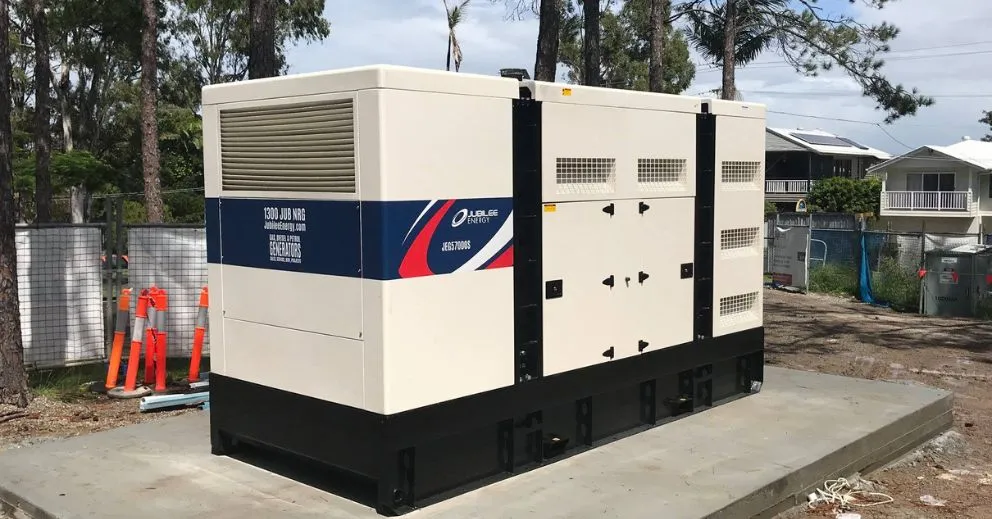
A generator creates power on demand using fuel, most commonly diesel or gas. As long as fuel is available, it can continue running.
Generators are designed to:
- Handle high electrical loads
- Run for long periods during extended outages
- Power heavy and three-phase equipment
- Operate independently of weather conditions
This makes them particularly suited to Australian environments where outages can be unpredictable and prolonged.
Why generators suit many Australian businesses
Generators are often the better choice when:
- Outages can last hours or days
- Your business relies on refrigeration, machinery, or pumps
- You’re in a regional or industrial area
- Downtime has a direct financial or safety impact
With the right sizing and setup, a generator can keep a business operating close to normal, not just limping along.
Battery vs generator: a practical comparison
Instead of thinking about technology, it helps to think about outcomes.
Battery backup
- Instant power
- Quiet and low maintenance
- Best for short outages and light loads
- Limited runtime unless heavily scaled
Generator backup
- High power capacity
- Long runtime with refuelling
- Handles demanding equipment
- Requires servicing and fuel management
In Australian conditions, the deciding factor is often duration. If you need power beyond a few hours, generators usually win.
What about combining batteries and generators?
Some businesses choose a hybrid approach. Batteries provide instant power while the generator starts, or cover short interruptions so the generator doesn’t run unnecessarily.
This setup can:
- Smooth transitions during outages
- Reduce generator runtime
- Improve overall resilience
It’s not essential for everyone, but for critical operations, it can be a smart long-term solution.
Sizing and setup matter more than the technology
Whether you choose a battery, a generator, or both, the biggest mistakes come from poor planning.
A proper assessment looks at:
- What equipment must stay on
- Starting loads for motors and compressors
- Single-phase vs three-phase requirements
- How long you need to operate off-grid
- Space, noise, and site constraints
Without this, even the best system won’t deliver when it counts.
Choosing the right backup power for your business
Battery backup vs generator backup isn’t about which one is better on paper. It’s about which one keeps your business running in real Australian conditions.
At Jubilee Energy, we tailor solutions to meet your unique power generation requirements. Our commitment to your mission ensures you receive leading generators Australia service and products that deliver reliable power when you need it most.
Contact us today so we can discuss your site, your risks, and the backup power solution that actually fits how your business operates.
Key Takeaways
- Battery backup is best for short outages and light loads.
- Generators are better suited to long outages and demanding equipment.
- Australian conditions often favour generators due to outage duration and environmental factors.
- Batteries can’t generate power, once they’re empty, they’re done.
- The right choice depends on your business, not the trend.
FAQ
Is battery backup cheaper than a generator?
For small loads and short runtimes, batteries can be cost-effective. For larger loads or longer outages, generators are usually far more economical.
Can a battery run my whole business?
In most cases, no. Running refrigeration, machinery, or three-phase equipment for long periods requires very large and expensive battery systems.
Are generators still relevant with renewable energy?
Yes. Generators provide reliability when renewables can’t, especially during bad weather or extended outages.
Which option is more reliable during extreme weather?
Generators, as they don’t rely on sunlight or grid availability and can run continuously with fuel.
More insights from us
Discover the latest in power generation technology.
.jpg)