.jpg)
For many commercial and industrial operations, a reliable power supply isn’t optional. Unexpected outages can disrupt production, halt critical systems, and lead to significant financial losses. That’s why many businesses install generators to provide backup or primary power when the grid can’t deliver.
However, installing a generator at a commercial site in Australia involves more than simply selecting a unit and connecting it to your electrical system. There are important requirements around safety, compliance, site design, and system integration. Understanding these requirements helps ensure your generator operates safely, meets regulatory standards, and performs reliably when it’s needed most.
Summary: Installing a generator on a commercial site in Australia requires careful planning to meet safety regulations, electrical standards, and operational requirements. Key considerations include electrical compliance, proper ventilation, fuel storage, noise control, environmental protection, and safe site placement. Generators must also be integrated correctly with the building’s electrical system and installed by qualified professionals. Working with an experienced power generation provider helps ensure the system is designed, installed, and maintained to meet Australian standards while delivering reliable power for commercial and industrial operations.
Why commercial generator installation requires careful planning
Generators used in commercial and industrial settings are typically larger and more complex than residential units. They often need to support critical equipment, large facilities, or continuous operations.
Because of this, installation involves multiple technical and regulatory considerations, including:
- electrical safety standards
- structural and site requirements
- fuel systems
- environmental and noise regulations
- maintenance access and ventilation
A properly planned installation ensures the generator operates safely and performs as expected during an outage or when running as a primary power source.
Compliance with Australian electrical standards
Commercial generator installations must comply with relevant Australian electrical regulations and safety standards. These standards are designed to protect both people and equipment while ensuring the generator integrates safely with the existing power system.
Key compliance considerations often include:
- correct electrical wiring and protection systems
- safe connection to switchboards and distribution networks
- proper earthing and grounding
- automatic transfer switch (ATS) integration
- compliance with Australian Standards and local electrical codes
All electrical work must be carried out by qualified and licensed professionals.
Site location and placement
Where a generator is installed can significantly affect safety, performance, and maintenance access.
Commercial installations usually require careful consideration of:
- distance from buildings and air intakes
- ventilation and airflow
- safe exhaust discharge
- noise impact on surrounding areas
- access for servicing and refuelling
- protection from flooding or environmental hazards
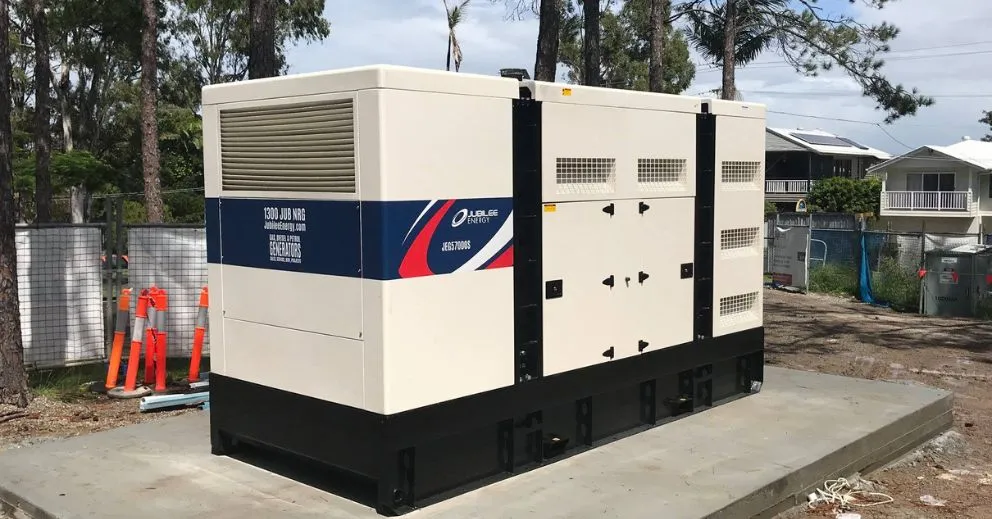
In some cases, generators may be installed outdoors, within acoustic enclosures, or inside dedicated plant rooms designed for generator systems.
Ventilation and cooling requirements
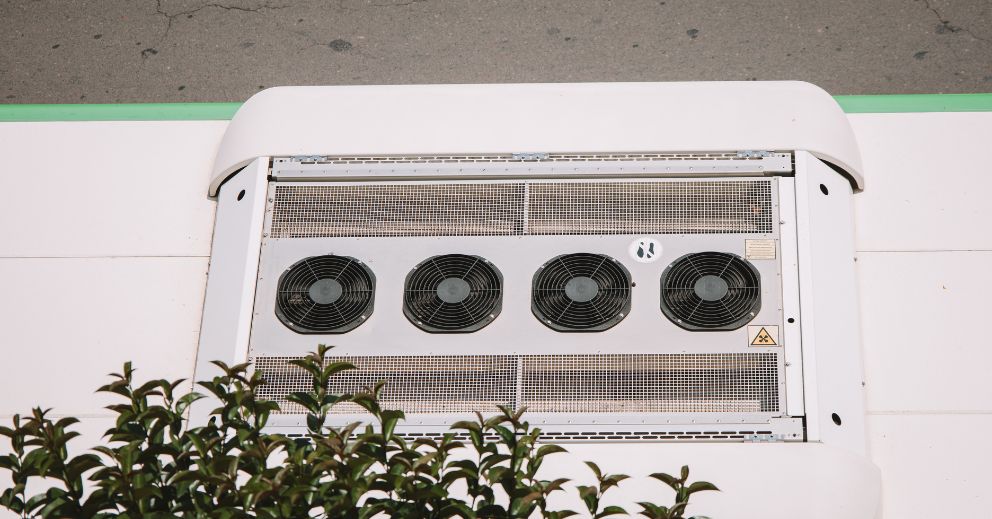
Generators generate significant heat during operation. Proper ventilation is necessary to prevent overheating and maintain stable performance.
Ventilation planning typically ensures:
- adequate airflow for engine combustion
- effective heat removal from the generator room or enclosure
- safe dispersal of exhaust gases
- protection of surrounding equipment from heat build-up
In enclosed installations, ventilation systems must be carefully designed to prevent recirculation of hot air.
Fuel storage and supply considerations
Commercial generators commonly use diesel fuel, which requires appropriate storage and handling systems.
Fuel system planning may include:
- compliant fuel storage tanks
- safe fuel lines and connections
- spill containment systems
- fuel monitoring and management
- refuelling access and safety procedures
For facilities that rely on extended backup power, fuel storage capacity must also be carefully calculated to support the required runtime.
Noise control and acoustic considerations
Generators can produce significant noise, particularly larger commercial units. Many installations require acoustic management to reduce the impact on nearby buildings or surrounding communities.
Noise control measures may include:
- acoustic enclosures
- sound-dampening materials
- strategic generator placement
- noise barriers or plant room design
Noise regulations may vary depending on the site location and local council requirements.
Environmental and safety considerations
Commercial generator installations must also consider environmental protection and workplace safety.
Important factors may include:
- emissions management
- spill prevention and containment
- fire safety measures
- safe access for maintenance staff
- emergency shutdown systems
These considerations help ensure the generator operates safely while meeting environmental and regulatory obligations.
Electrical integration and automatic transfer systems
A key part of generator installation is integrating the system with the site’s electrical infrastructure. Most commercial generators are connected through an automatic transfer switch (ATS).
The ATS detects when grid power fails and automatically switches the site to generator power. When grid power returns, the system transfers back safely.
Proper integration ensures:
- seamless power transitions
- protection of sensitive equipment
- reliable generator start-up during outages
- stable electrical performance across the facility
For businesses that depend on continuous power, this integration is essential.
Maintenance access and long-term serviceability
Generator installations should always allow for safe and practical maintenance access. Equipment that is difficult to reach or service can lead to delays, higher costs, and reduced reliability.
Good installation planning ensures:
- sufficient space around the generator
- safe access for technicians
- easy filter and component replacement
- clear pathways for inspection and servicing
Designing with maintenance in mind helps extend the life of the generator system.
The value of a tailored generator solution
Every commercial site has unique power demands, environmental conditions, and regulatory requirements. A one-size-fits-all generator installation rarely delivers the best results.
Tailored generator solutions consider:
- power load requirements
- site layout and infrastructure
- environmental conditions
- operational needs
- compliance and safety standards
This approach helps ensure the generator system performs reliably while meeting all necessary regulations.
Power solutions designed for commercial and industrial environments
At Jubilee Energy, we specialise in bespoke power generation solutions for commercial and industrial clients across Australia and the Asia-Pacific region. Our focus on quality engineering and innovative system design ensures each generator installation is tailored to the unique operational and environmental requirements of the site.
From standby power systems to large-scale industrial power solutions, Jubilee Energy works with businesses to design, install, and support reliable generator systems that meet the highest standards of performance and safety. Reach out today.
Key takeaways
- Commercial generator installations in Australia must meet electrical safety and regulatory requirements.
- Proper site placement, ventilation, and exhaust management are essential for safe operation.
- Fuel storage systems must comply with safety and environmental standards.
- Noise control measures may be required depending on the installation location.
- Generators should be integrated with automatic transfer systems to ensure seamless power switching.
- Installation planning should include maintenance access and long-term serviceability.
- Working with experienced power generation specialists helps ensure compliance, reliability, and optimal system performance.
FAQ
Do commercial generators need approval in Australia?
In many cases, yes. Generator installations may need to comply with local council regulations, building codes, and electrical safety standards. Approval requirements can vary depending on the site and generator size.
Who can install a commercial generator?
Commercial generator installations must be carried out by licensed electricians and qualified professionals experienced in power generation systems.
What is an automatic transfer switch?
An automatic transfer switch (ATS) is a device that automatically switches a building’s power supply from the grid to the generator during a power outage, and back again when grid power returns.
How much space is needed for a commercial generator?
The required space depends on the generator size, enclosure type, ventilation requirements, and maintenance access needs. Larger generators require more clearance for safe operation and servicing.
Do generators need ventilation?
Yes. Generators require adequate airflow for combustion, cooling, and safe exhaust management. Poor ventilation can lead to overheating and performance issues.
How often should commercial generators be serviced?
Service intervals vary depending on the generator model and usage, but regular maintenance inspections are typically recommended to ensure reliability and compliance with manufacturer guidelines.
More insights from us
Discover the latest in power generation technology.