Installing a backup generator is one of the smartest ways to protect your home or business from unexpected power outages. But choosing the right generator is only half the job. Where you install it plays a big role in how safe, effective and reliable it will be.
A poorly placed generator can create noise issues, safety risks, or even fail to perform when you need it most. On the other hand, a well-planned installation ensures proper airflow, easy maintenance, and seamless power supply when the grid goes down.
Summary: The ideal location for a backup generator depends on several factors, including safety regulations, accessibility, noise control, and how your property is set up. In general, generators should be installed outdoors in a well-ventilated area, positioned a safe distance from buildings, and placed where they can be easily serviced. Getting this right from the start helps avoid compliance issues and ensures your system runs reliably when it matters most.
Why generator placement matters more than you might think
It’s tempting to think you can install a generator anywhere there’s space, but placement directly affects performance and safety.
A well-positioned generator helps:
- prevent exhaust fumes from entering buildings
- reduce fire risks
- minimise noise disruption
- allow proper airflow and cooling
- ensure easy access for servicing and refuelling
For commercial and industrial sites especially, incorrect placement can also lead to compliance issues with local regulations and Australian standards.
Outdoor installation is essential
Backup generators should always be installed outdoors. This isn’t just a recommendation, it’s a safety requirement.
Generators produce carbon monoxide, which is dangerous in enclosed or poorly ventilated spaces. Installing a generator indoors, in a garage, or too close to openings like windows or doors can allow fumes to enter the building.
Outdoor installation ensures:
- safe dispersal of exhaust gases
- better ventilation for engine cooling
- reduced risk to occupants
Keep a safe distance from buildings
Distance matters when it comes to generator placement. While exact requirements can vary depending on local regulations and the type of generator, a general rule is to keep the unit several metres away from doors, windows, vents and walls.
This helps to:
- prevent exhaust fumes from re-entering the building
- reduce heat transfer to nearby structures
- maintain safe operation during extended use
It’s also important to consider nearby structures like fences or neighbouring properties, especially in tighter spaces.
Allow proper airflow and ventilation
Generators generate heat when running, and without adequate airflow, they can overheat or operate inefficiently.
Make sure the installation area:
- is open and well-ventilated
- isn’t enclosed by walls or barriers
- allows heat to dissipate easily
Avoid placing generators in narrow side passages or boxed-in areas unless they’re specifically designed with ventilation in mind.
Think about noise and neighbour impact
Generators can be noisy, particularly larger commercial or industrial units. Placement should take into account how sound travels across your property and beyond.
To reduce noise impact:
- position the generator away from bedrooms, offices or quiet areas
- consider barriers or acoustic enclosures if needed
- avoid placing it close to neighbouring properties where possible
Planning ahead can help you avoid complaints and create a more comfortable environment for everyone.
Ensure easy access for maintenance
A generator isn’t a set-and-forget piece of equipment. It needs regular servicing to stay reliable.
That means you’ll want it installed in a location where technicians can easily access it without obstacles.
Good access allows for:
- routine inspections
- repairs and part replacements
- safe refuelling or fuel system checks
If access is difficult, maintenance can become more time-consuming and costly.
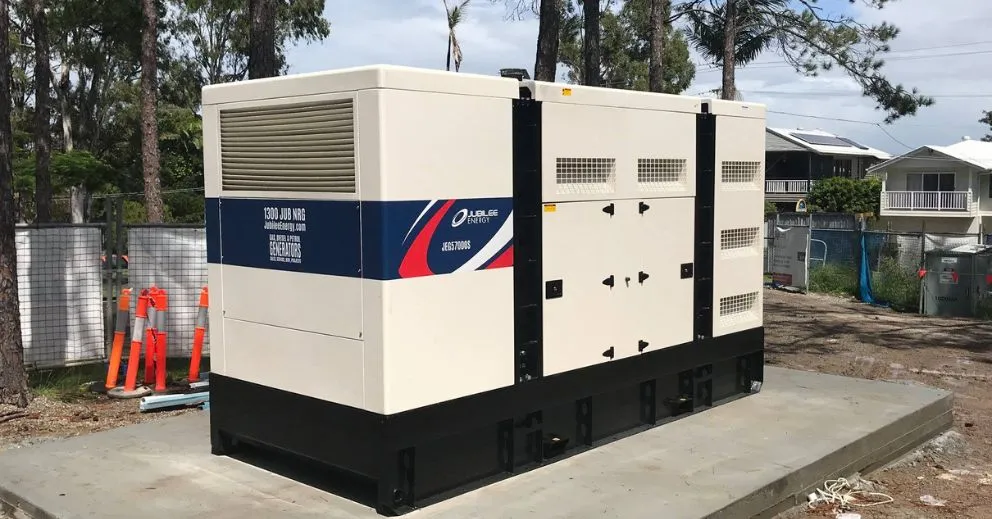
Consider weather protection and ground stability
Generators are built for outdoor use, but they still need protection from extreme conditions.
The installation site should:
- be on stable, level ground
- have proper drainage to prevent water pooling
- be protected from flooding or heavy debris
In some cases, installing a canopy or enclosure can help protect the unit from harsh weather while still allowing proper ventilation.
Placement for commercial and industrial properties
For commercial and industrial applications, generator placement becomes more complex. It’s not just about safety, but also operational efficiency and compliance.
You may need to consider:
- proximity to critical systems and switchboards
- load requirements and cable routing
- integration with existing infrastructure
- site-specific safety regulations and permits
This is where working with an experienced provider makes a real difference. A tailored approach ensures your generator is installed in the right location for both performance and compliance.
Why professional planning is essential
Every property is different. What works for one site may not work for another.
Professional assessment takes into account:
- site layout and constraints
- power requirements
- safety regulations
- long-term operational needs
At Jubilee Energy, we specialise in bespoke power generation solutions across Australia and the Asia-Pacific region. Our team works closely with clients to design and install generator systems that meet the highest standards for safety, reliability and performance. Get in touch today.
Key takeaways
- The best place to install a backup generator is outdoors in a well-ventilated area
- It should have safe clearance from buildings, good accessibility, and minimal impact on surrounding spaces
- Proper placement supports safe operation and reduces potential risks
- It also helps ensure reliable performance when you need the generator most
- For commercial and industrial setups, a tailored installation plan is essential to meet operational and compliance requirements
FAQ
Can a backup generator be installed indoors?
No. Generators should always be installed outdoors due to the risk of carbon monoxide buildup and poor ventilation.
How far should a generator be from a building?
The exact distance can vary, but it should be several metres away from doors, windows and vents. Always follow local regulations and manufacturer guidelines.
Can I install a generator myself?
For most systems, especially commercial or industrial ones, professional installation is strongly recommended to ensure safety, compliance and proper performance.
Do generators need a concrete base?
In many cases, yes. A stable, level base such as concrete helps support the unit and reduce vibration.
How do I reduce generator noise?
You can reduce noise by placing the generator further from occupied areas, using acoustic enclosures, or installing sound barriers where appropriate.
What happens if a generator overheats?
Overheating can lead to reduced performance or damage. Proper placement with good airflow helps prevent this issue.
More insights from us
Discover the latest in power generation technology.
.jpg)