
When a business starts looking at backup power, the choice used to be simple: buy a generator. Today, battery energy storage systems (BESS) are a serious alternative, and plenty of businesses are weighing one against the other.
Both keep critical equipment running when the grid fails, but they work very differently. The right choice depends on how long your outages last, how quickly your equipment needs power back, and whether you want your backup system to earn its keep the rest of the time.
TLDR: Battery storage switches over almost instantly and runs silently with no on-site emissions, but its runtime is limited by its capacity. A standby generator can run for as long as it has fuel and handles large loads well, but takes a few seconds to start and needs regular servicing. For many businesses the strongest answer is a hybrid: batteries for instant, short-term cover and a generator for long outages.
How Each Option Works
Battery Energy Storage Systems (BESS)
A battery energy storage system stores electricity, from the grid or from solar panels, and releases it when it's needed. When the grid fails, an inverter switches the site onto battery power, often fast enough that equipment doesn't notice the change.
Standby Generators
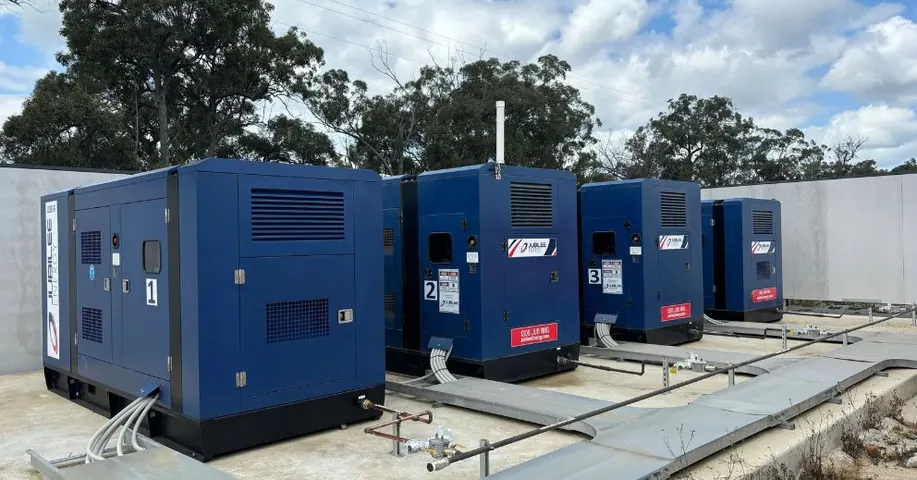
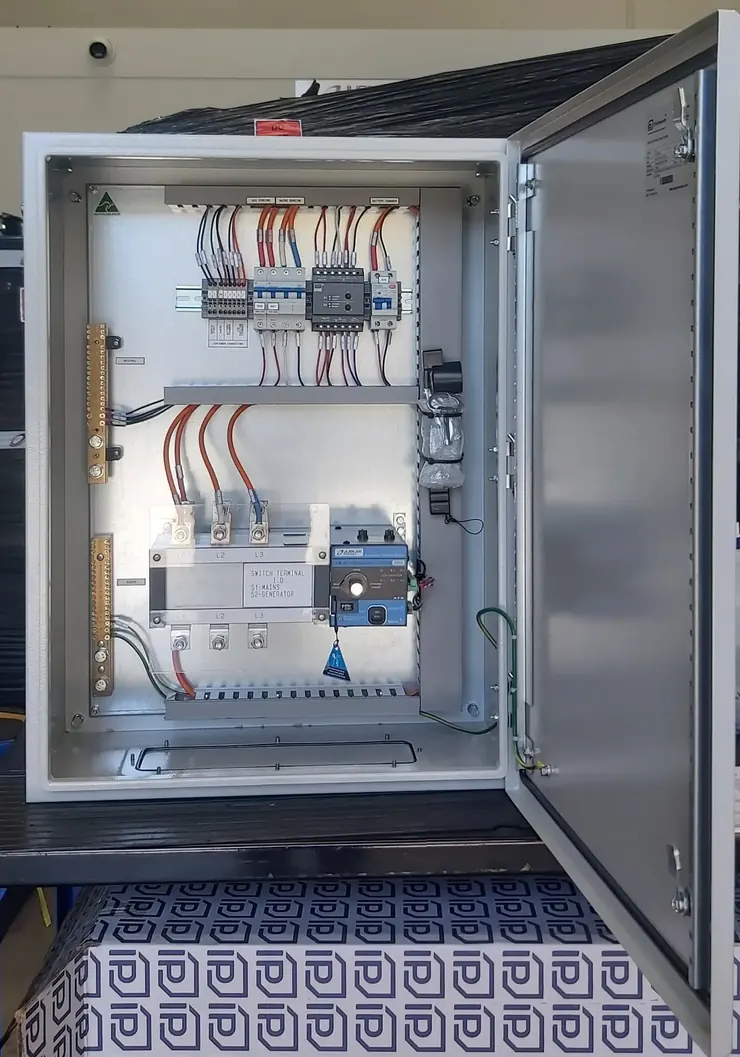
A standby generator burns diesel or gas to produce electricity on demand. When an automatic transfer switch detects a grid failure, it starts the generator and moves the load across, usually within seconds. It keeps running for as long as fuel is available.
Comparing Battery Storage and Generators
Runtime
This is the biggest difference. A battery holds a fixed amount of energy, so its runtime depends on its capacity and how much load you connect. A generator's runtime is limited only by its fuel supply, which makes it the safer choice for long outages after storms or network faults.
Switchover Speed
Batteries win here. Many systems switch over in a fraction of a second. A generator needs a few seconds to start and stabilise before the transfer switch moves the load, so sensitive equipment may need a UPS to bridge the gap.
Load Capacity
Generators handle large and demanding loads well, including motors, pumps and compressors with high starting currents. Batteries can do this too, but sizing a system for heavy loads and long runtimes increases its cost quickly.
Noise, Emissions and Placement
Batteries are silent and produce no emissions on site, so they can sit close to occupied areas. Generators need ventilation, exhaust routing, fuel storage and attention to noise, which affects where they can be installed. Read more about indoor vs outdoor generator installation.
Running Costs and Maintenance
Generators need fuel, regular servicing and periodic testing under load. Batteries need far less hands-on maintenance, but their capacity slowly declines over their working life and the upfront cost per kilowatt hour is higher.
Everyday Value
A generator mostly waits for an outage. A battery can work every day: storing solar energy for use in the evening, or reducing demand from the grid at peak times. For some businesses that everyday saving helps justify the investment.
When a Hybrid System Makes Sense
You don't have to choose one or the other. A hybrid power system combines batteries, a generator and often solar, with controls that decide which source runs when.
- The battery covers short outages instantly and silently.
- If an outage runs long, the generator starts, carries the load and recharges the battery.
- The generator runs less often and at a healthier load, which cuts fuel use and wear.
- Solar keeps the battery topped up during normal operation.
For sites with long or unpredictable outages, or where downtime is expensive, a hybrid often gives the best mix of resilience and running cost.
Questions to Ask Before You Decide
- How long do outages at your site typically last, and how long could one last?
- Which equipment must stay on, and how much power does it draw?
- Can that equipment tolerate a few seconds without power?
- Do you have, or plan to add, solar panels?
- Are there noise, emissions or space restrictions on your site?
- Do you want your backup system to reduce energy costs day to day?
Answering these gives you a clear picture of whether batteries, a generator or a hybrid fits best. Our guide on why every business needs a backup power plan is a good place to start.
Related reading
Not Sure Which Backup Option Suits Your Site?
Batteries, generators and hybrid systems each have a place. The right answer depends on your loads, your outage risk and how you want your system to work day to day.
Jubilee Energy supplies battery storage, standby generators and hybrid power systems, and can help you size a solution for your site. If you'd like to talk it through, get in touch.
Key Takeaways
- Battery storage switches over almost instantly but its runtime is limited by its capacity.
- A standby generator can run for as long as it has fuel and handles large loads well.
- Batteries are silent with no on-site emissions; generators need ventilation, fuel storage and servicing.
- Batteries can save money every day by storing solar or reducing peak demand.
- A hybrid of batteries and a generator often gives the best balance of resilience and running cost.
FAQ
Can a battery replace a generator for business backup?
For short outages and smaller loads, yes. For long outages or heavy loads, a battery large enough to cover them can be very expensive.
Many businesses use a battery for instant cover and keep a generator for longer outages.
How long will a battery storage system power my business?
It depends on the battery's capacity and how much load is connected. A system sized for essential loads only will last much longer than one running the whole site.
Your supplier can calculate runtime from your actual load profile.
How fast does a standby generator take over in an outage?
With an automatic transfer switch, a standby generator typically starts and takes the load within seconds.
Equipment that can't tolerate any interruption may need a UPS or battery to bridge those seconds.
Do battery systems need maintenance?
Much less than a generator, but they still need periodic checks of the inverter, connections and battery health.
Battery capacity also declines gradually over time, which should be factored into sizing.
What is a hybrid power system?
A hybrid system combines a battery, a generator and often solar panels, with controls that choose the best source at any moment.
The battery handles short outages and the generator covers long ones, while also recharging the battery.
More insights from us
Discover the latest in power generation technology.