

DSEAts Transfer Switch Controllers
The modules that decide when a supply has failed and drive the changeover — plus the self-seeking power supplies that keep a control panel alive when both supplies are down.
Transfer switch control and panel power
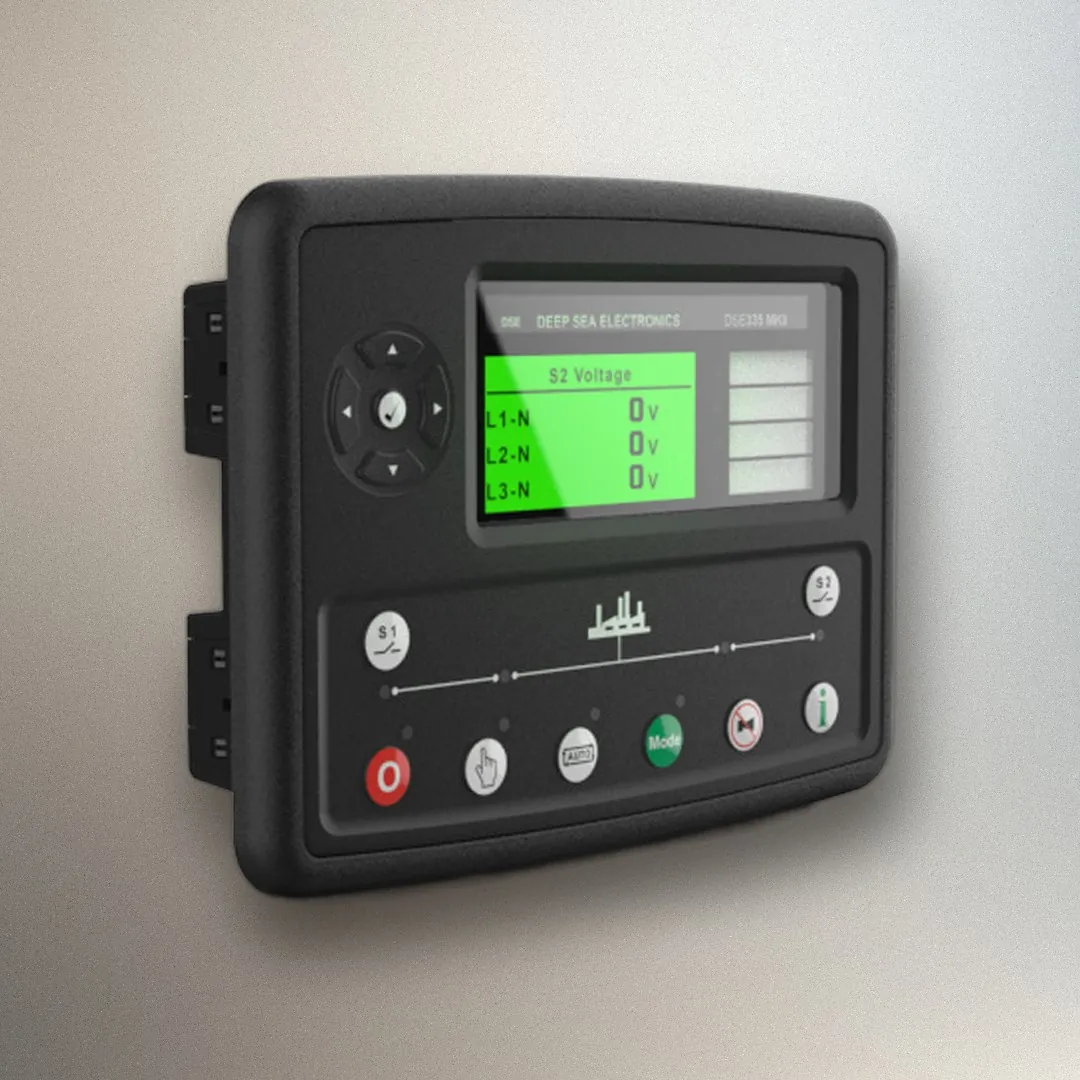
DSEAts modules control the transfer of a load between two supplies, typically mains and generator, or two mains supplies. They monitor both sources, decide when a supply has failed, and drive the transfer switch, with changeover timing and the voltage and frequency windows all configurable.
The range runs from the DSE331 up to the DSE335 MKII for more demanding installations, and every module monitors voltage and frequency on both supplies. The DSE160 self-seeking power supplies are here because they are what keeps a control panel alive when both supplies are down.
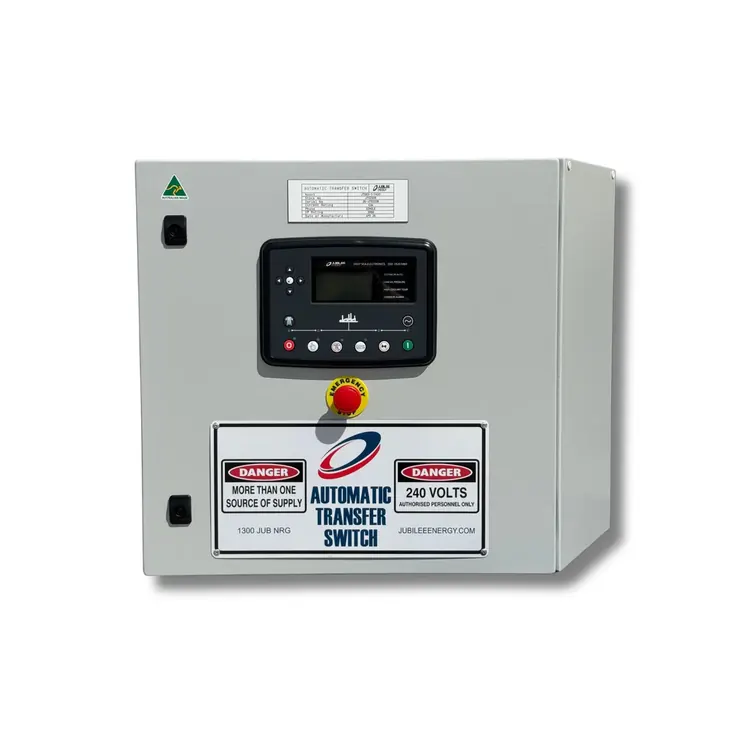
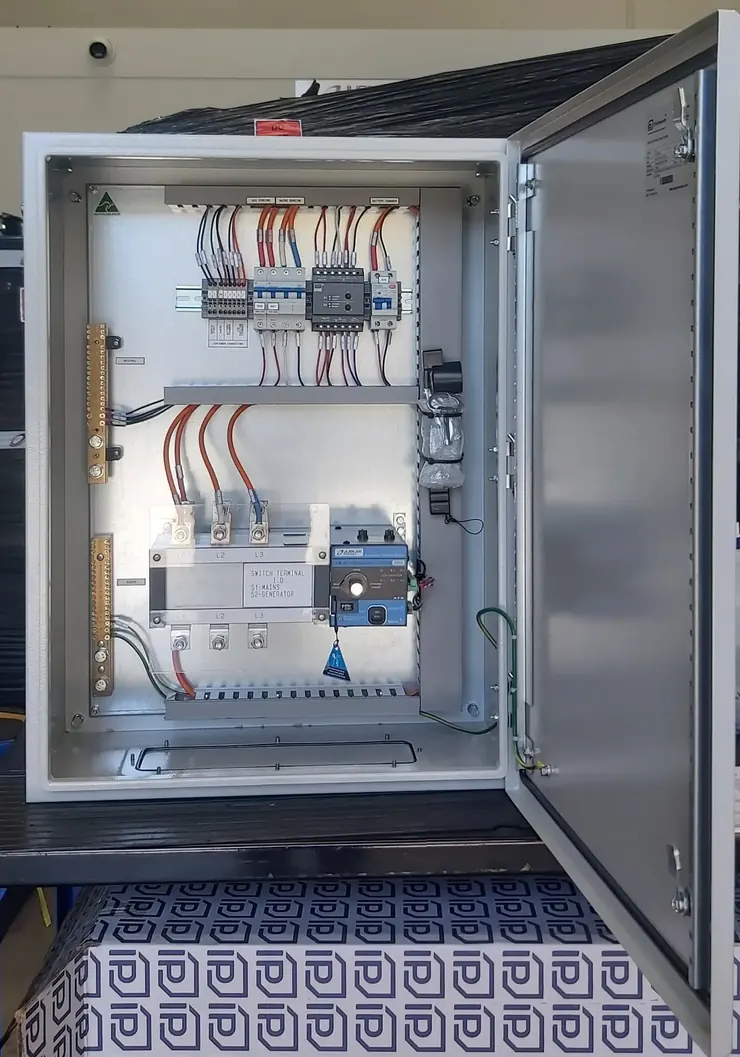
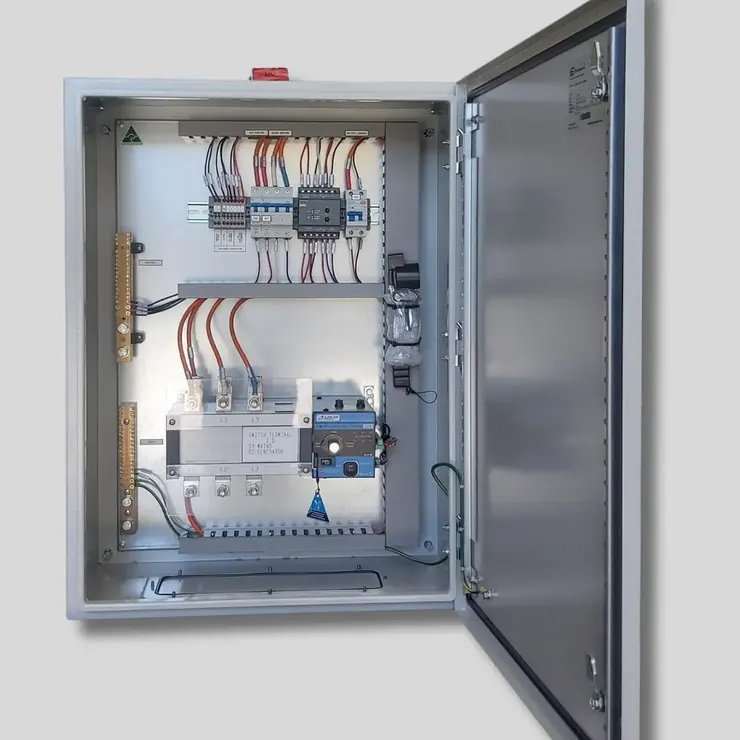
Jubilee Energy also builds and supplies complete ATS panels — see Automatic Transfer Switch.
Advantages of DSEAts Transfer Switch Controllers
A dedicated transfer switch controller decides when a supply has failed and drives the changeover, without needing a full generator controller in the panel. The DSE160 keeps it alive when both supplies are down.
Voltage and frequency windows
The DSE331, DSE334 and DSE335 MKII watch both, so a supply that holds voltage but drifts off frequency still triggers the transfer.
Nuisance-start protection
Configurable timing sequences ride through a short supply dip instead of starting the set and transferring the load for a two-second outage.
Panel power through the outage
The DSE160 self-seeking power supply feeds the controller from mains, generator or battery and swaps between them itself when one drops out.
Key Features
- DSE331, DSE334 and DSE335 MKII, each sensing voltage and frequency on both supplies
- Mains-to-generator and mains-to-mains transfer from the same module
- DSE160 self-seeking power supply in 12 V and 24 V, 110 to 277 V AC input
- Configured with the DSE Configuration Suite, with front-panel editing on the DSE335 MKII


Learn More About DSEAts Transfer Switch Controllers
Guides from our blog on how automatic transfer switches work and what they add to a standby system.
DSEAts Transfer Switch Controller FAQ
The DSE331, DSE334 and DSE335 MKII all monitor voltage and frequency on both supplies, which matters where a generator can hold voltage while its frequency drifts, and all issue the start command to the second source when the first fails. The DSE335 MKII is the largest of the three, with a 220 mm by 160 mm panel cut-out, configurable inputs and outputs, and PC configuration through the DSE Configuration Suite. Send us the panel drawing and the two sources and we will match the module.
No. The module monitors the two sources, issues the start command to the second source when the first fails, and drives your transfer device once the second source is within limits. The contactors or motorised switch are separate. Jubilee Energy builds complete transfer switch panels around these modules; see our Automatic Transfer Switches page.
A DC supply: the DSE331, for example, runs from 12 or 24 V DC. That is where the DSE160 comes in. DSE built it for the DSE 3xx modules, and it feeds the controller from whichever mains, generator or battery is live.
It powers a DSE 3xx ATS controller from whichever source is live. It accepts mains, generator or battery, and when the mains fails it switches itself to generator or battery power, so the controller keeps running through the changeover. Three LEDs on the front show which source it is on. It comes in 12 V and 24 V versions and takes 110 to 277 V AC in.
Match the DC supply the control module and the panel run on. A 24 V starting battery system takes the 24 V unit. If the panel has no battery and the DSE160 is the only DC source, match it to the controller's rated supply.
Yes. Source 1 and source 2 can each be a generator or a mains supply, so a mains-to-mains changeover between two incoming feeds uses the same module as a mains-to-generator one. Timing sequences on each module stop a short supply dip from starting a changeover.

Talk to an engineer
Have questions or need assistance? Our team is ready to help you via email, phone, not a chatbot.
Latest Blogs

Our team is ready to help!
If you have any questions, need further information, feel free to reach out, and we'll get back to you as soon as possible. We look forward to hearing from you!