

Fuel & Tank Level Senders
Senders that report tank contents to a controller, gauge or telemetry system — resistive, 4–20 mA and voltage output, in lengths from 97 mm to 1100 mm.
Knowing how much fuel is actually in the tank
A fuel level sender reports tank contents to a controller, gauge or telemetry system. Getting one right comes down to three things: the depth of the tank, the output the receiving equipment expects, and the mounting.
Outputs here cover resistive (0–190 ohm and 240–33 ohm), 4–20 mA current loop, and 0.8–4.5 V. Resistive senders suit traditional gauges and most generator controllers; a current loop is the better choice over long cable runs or in electrically noisy installations. Mountings run from SAE five-hole flange to 1-1/4" BSP threaded.
Measure the internal depth of the tank before ordering — sender length is the specification people most often get wrong.
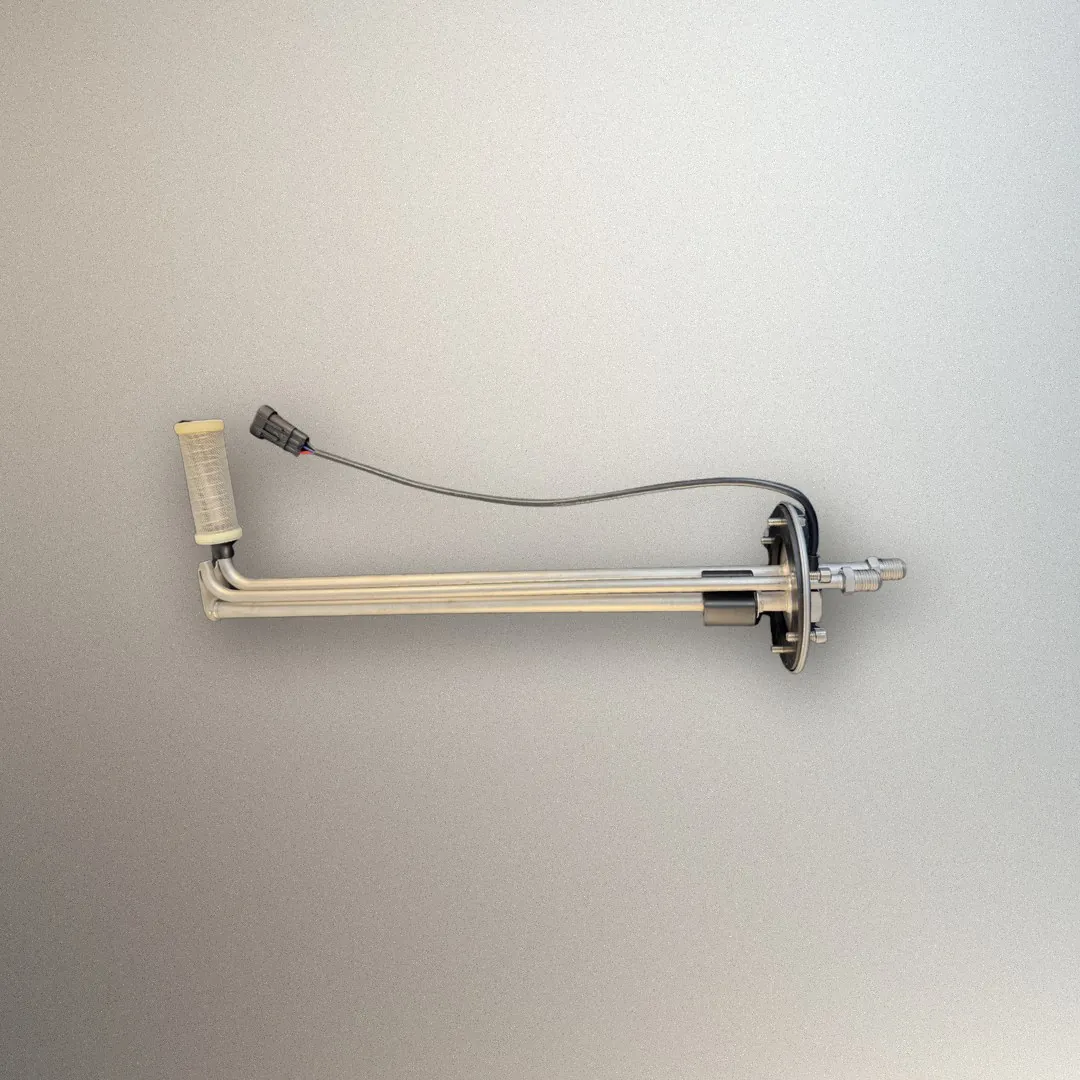
Advantages of Matching the Sender to the Tank
A sender that matches the tank depth, the mounting and the output the controller expects reads right on day one. One that does not will read wrong in a way that looks plausible.
The outputs controllers expect
Resistive in both 0-190 and 240-33 ohm ranges, 4-20 mA current loop, and 0.8-4.5 V, with a dual-output CR-6061-1 for installations that need two.
Lengths to fit
Fixed lengths from 97 mm to 1100 mm, plus the VDO adjustable unit that covers 150 mm to 535 mm for a retrofit or a custom tank.
Built for diesel tanks
316 stainless KUS units and marine-grade TN series units, reed-switch operated, for vibration and long service in a bunded tank.
Key Features
- Fixed lengths from 97 mm to 1100 mm, plus an adjustable 150 to 535 mm unit
- Resistive 0-190 ohm and 240-33 ohm, 4-20 mA and 0.8-4.5 V outputs
- SAE 5-hole flange and 1-1/4 inch BSP threaded mountings
- TN series suction and return senders that combine feed, return and level in one fitting


Learn More About Fuel & Tank Level Senders
Guides from our blog on fuel monitoring, bunded tanks and keeping stored diesel clean.

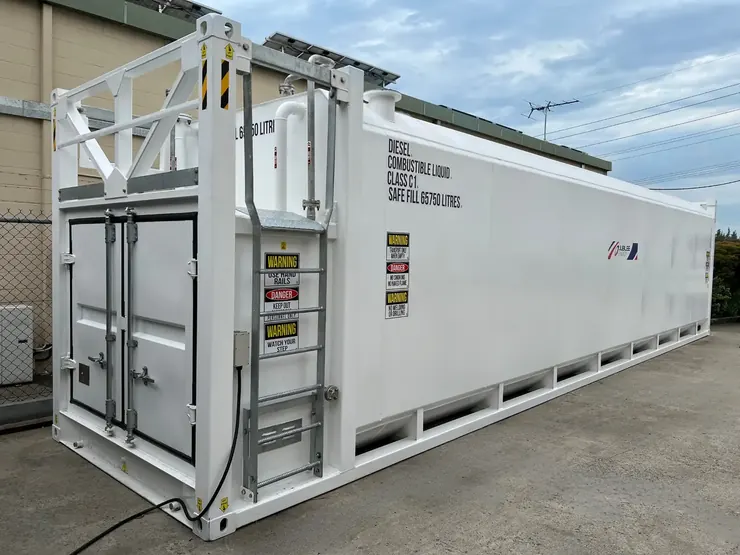

Fuel and Tank Level Sender FAQ
Measure the internal depth of the tank from the mounting face to the bottom, and order the sender closest to that without exceeding it. Lengths here run from 97 mm to 1100 mm. If no fixed length suits, the VDO adjustable sender covers 150 mm to 535 mm from one unit. Sender length is the specification people most often get wrong.
Match the receiving equipment. Traditional gauges and most generator controllers take a resistive sender; the KUS units are 0-190 ohm (one 1100 mm unit is 0-180 ohm) and the VDO unit is 240-33 ohm, so check which range your gauge or controller expects. A 4-20 mA current loop suits a telemetry unit, PLC or a long cable run in an installation with electrical noise. The CR-6061-1 gives both 0.8-4.5 V and 4-20 mA from one sender.
The direction and range of the resistance swing. A 0-190 ohm sender reads low resistance empty and high resistance full; a 240-33 ohm sender reads the opposite. A gauge calibrated for one will read backwards or off-scale on the other, so match the sender to the gauge or reconfigure the controller input.
Two types. The SAE 5-hole flange, used on the CR-6061-1, the TN series and the 97 mm L6 unit, bolts to a matching flange on the tank top. The 1-1/4 inch BSP thread, used on the KUS stainless units, screws into a threaded boss. Check the tank before ordering: a flange sender will not fit a threaded boss.
Yes. The TN series suction and return senders combine the fuel feed, the fuel return and the level sender in one SAE 5-hole unit, in 150 mm and 420 mm lengths, so a generator tank needs one penetration instead of three.
The KUS stainless units can. They use reed switches in a 316 stainless steel body, and the two-wire versions work as an on-off switch on a digital input, which is how you fit one as a bund high-level alarm on a self-bunded tank.

Talk to an engineer
Have questions or need assistance? Our team is ready to help you via email, phone, not a chatbot.
Latest Blogs

Our team is ready to help!
If you have any questions, need further information, feel free to reach out, and we'll get back to you as soon as possible. We look forward to hearing from you!