

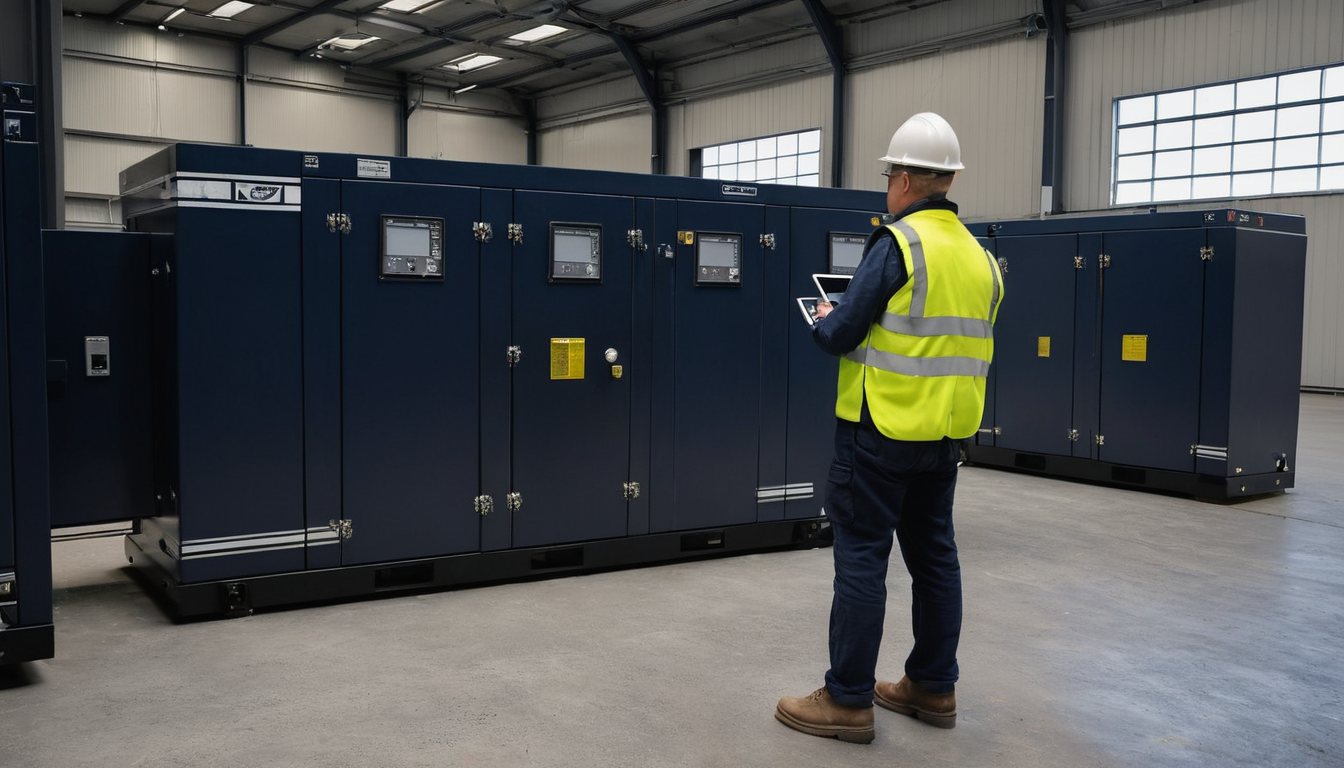
Most standby generators spend their lives waiting. They're started now and then, run for a few minutes with nothing connected, and switched off again. The engine turns over, the panel shows no alarms, and everyone assumes the set is ready for the day the power fails.
That assumption is where problems hide. A generator that starts and idles has only proven it can start and idle. Whether it can pick up your building's load, hold its voltage and frequency, and keep running at temperature for hours is a different question, and a load bank test is how you answer it.
TLDR: A load bank test connects your generator to an artificial electrical load and runs it in steps up to its rated output, while engineers log voltage, frequency and engine readings. It proves the set can carry real load, burns off the carbon build-up that light running leaves behind, and catches faults before an outage does. Standby sets that rarely run under load, new installations, and generators coming back from major repairs benefit most.
What Is a Load Bank?
A load bank is a piece of test equipment that draws power from a generator in a controlled way. Instead of switching on lights, motors and air conditioning, you connect the load bank and dial in exactly how much load you want the generator to carry.
Resistive and Reactive Load Banks
Resistive load banks turn electrical energy into heat, much like a very large heater, and are the most common type for routine testing. Reactive load banks add inductive load, which behaves more like motors and transformers on a real site. Combined resistive-reactive units let you test closer to the conditions your generator will actually see.
Why Not Just Use the Building's Load?
Testing on the building's own load means switching your site onto generator power and hoping nothing goes wrong. You also can't choose how much load is applied: on a quiet day it may only reach a fraction of the set's rating. A load bank gives you a controlled, repeatable test without putting your operations at risk.
What Happens During a Load Bank Test
A proper test is more than turning the dial to maximum. At our Brendale workshop, every generator we supply is load tested before it leaves, and the same process applies to sets already in service.
Stepped Load to Full Rated Output
The load is applied in stages, for example 25%, 50%, 75% and then 100% of the generator's rating. At each step the set is held long enough to stabilise, and at full load it runs until it reaches normal operating temperature.
Readings Logged at Every Step
Voltage, frequency, oil pressure, coolant temperature and battery charge rate are recorded from the control panel at each load step. Those readings show whether the engine and alternator stay within limits as the load rises, and give you a baseline to compare against next time.
Protections Proven, Not Assumed
Alarms and shutdowns are triggered on purpose to confirm they trip. With the canopy open, engineers also inspect the set under load for leaks, loose connections and abnormal noise or vibration that a no-load run would never reveal.
What a Load Bank Test Catches
Running a generator under real load exposes problems that stay hidden when it idles.
- Wet stacking: unburnt fuel and carbon building up in the exhaust of sets that only ever run lightly loaded. A sustained run at high load helps burn it off. We cover this in why oversizing a generator can create performance issues.
- Overheating: cooling problems that only show once the engine is working hard.
- Fuel delivery faults: blocked filters or contaminated fuel that starve the engine as demand rises.
- Voltage and frequency instability: governor or regulator issues that would upset sensitive equipment.
- Failed protections: alarms or shutdowns that don't trigger when they should.
When Does Your Generator Need a Load Bank Test?
The right frequency depends on how the generator is used and what it protects. As a guide, consider a load bank test in these situations.
Standby Sets That Rarely Run Under Load
If your generator mostly sits idle and is only exercised without load, it is the most likely to suffer from wet stacking and hidden faults. Building a periodic load test into its service schedule is the best way to know it will perform.
New Installations
A load test is part of proper commissioning. It confirms the set, its controls and its changeover equipment work together before the site depends on them. Read more about why commissioning matters before first use.
After Major Repairs or a Long Lay-Up
Engine work, alternator repairs or months out of service all justify a test under load before the generator goes back on duty.
Sites With Compliance or Insurance Requirements
Hospitals, aged care, data rooms and other critical sites often have testing obligations for their emergency power. Check what your industry, insurer and the relevant Australian Standards require, and keep the test records.
How Load Bank Testing Fits Into Servicing
A load bank test doesn't replace routine servicing; it completes it. Oil, filters and coolant keep the engine healthy, and the load test proves the whole system works when it matters. Many owners schedule a load test alongside a regular service so the generator is only off duty once. Our guide to what's included in a professional generator service explains how the two fit together.
Related reading
Want to Know Your Generator Will Perform?
A start-up test tells you the engine runs. A load bank test tells you the generator can carry your site when the power goes out.
Jubilee Energy load tests every generator we supply, and offers the same test for sets already in service, as part of a scheduled service or on its own. If you'd like to book a test or talk through how often your generator needs one, get in touch.
Key Takeaways
- A generator that starts and idles hasn't proven it can carry real load.
- A load bank applies a controlled, repeatable load without putting your site at risk.
- A proper test steps up to full rated output while voltage, frequency and engine readings are logged.
- Load testing helps burn off wet stacking and exposes overheating, fuel and protection faults.
- Standby sets, new installations and generators back from repairs benefit most.
FAQ
What is a load bank test?
It's a test where a generator is connected to a load bank, an artificial electrical load, and run in steps up to its rated output.
Engineers log the generator's readings at each step to confirm it can carry its full load safely.
How often should a standby generator be load tested?
It depends on how often the set runs under real load and what it protects. Generators that rarely carry load, or that protect critical sites, should be load tested more often.
Your service provider can recommend a schedule based on your generator's hours, usage and any compliance requirements.
Will a load bank test interrupt my site's power?
No. The generator is connected to the load bank rather than your building, so your site stays on its normal supply during the test.
What is wet stacking?
Wet stacking is the build-up of unburnt fuel and carbon in a diesel generator's exhaust system. It happens when a set is regularly run at light load and never reaches full operating temperature.
Running the generator at high load during a load bank test helps burn it off.
Do new generators need a load bank test?
Yes. Load testing is part of proper commissioning and confirms the set and its controls work together before the site relies on them.
Every generator Jubilee Energy supplies is load tested in our Brendale workshop before delivery.
More insights from us
Discover the latest in power generation technology.